
“Khan” is an ancient title of authority associated with the peoples and political societies of the Central and East Asian steppe. It was used for rulers, chiefs, military commanders and other senior figures who held political or military authority. The title was not exclusive to one tribe, people or dynasty; different ruling communities adopted and used it according to their own political traditions. Its precise linguistic origin remains debated, but historically it became an established term for leadership and high status.
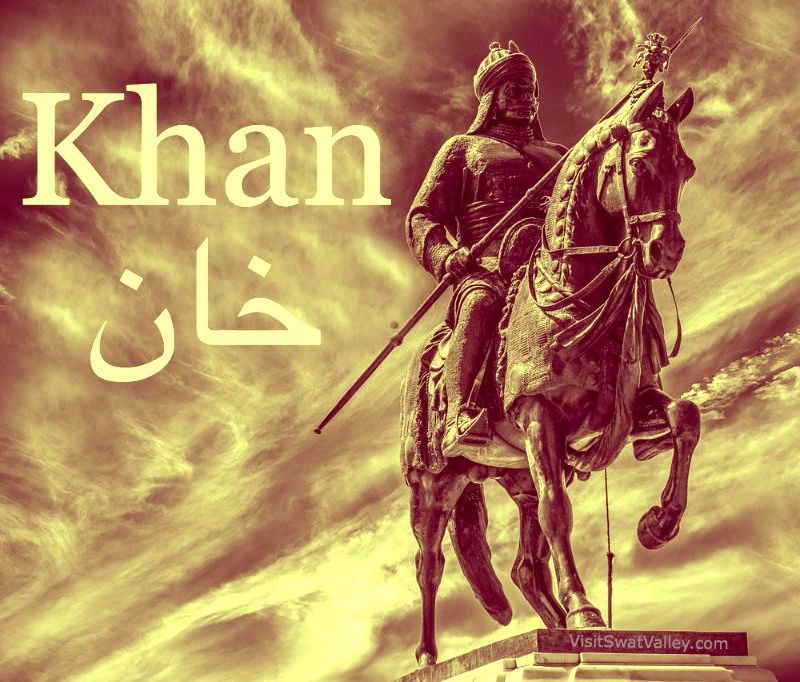
Khan
The title originally carried a political and social meaning, indicating a person who held authority over others, such as a ruler of a territory, a tribal leader or a senior member of a ruling elite. As political traditions changed and the title spread between different societies, its meaning gradually broadened. It could be used as a title of respect or status even when the person was not a sovereign ruler. Over time, “Khan” also became a personal honorific and, in some communities, a hereditary surname passed from one generation to the next. This later surname usage is therefore different from its original meaning as a title of political authority.
The Historical Origin of the Title & Surname “Khan”?
The title “Khan” has very ancient Central and East Asian origins, predating the medieval period by many centuries. It was also used in the wider Persianate world, including historical Khorasan, a region encompassing parts of present-day Afghanistan, southern Turkmenistan, Uzbekistan and Tajikistan. Related forms such as khagan are recorded in historical sources as early as the 3rd century CE, while the shorter form khan is associated with early peoples of the Central Asian and eastern steppe.
The exact linguistic origin and development of the word remain debated among historians and linguists, so it is difficult to assign it to a single people or precise date of invention. Over time, the title became established across a broad region stretching through Central Asia and parts of present-day China, particularly areas connected with the eastern and northern steppe. It was used for rulers, chiefs and political leaders, while its later adoption as an honorific and hereditary surname was a separate development that occurred over many centuries.
Did the Title “Khan” Originate with Genghis Khan?
The title “Khan” originated as a Central Asian title and predates Genghis Khan by centuries. It was used across Central Asia by various peoples for rulers, chiefs and political leaders. Thus, Khan was not a title created by Genghis Khan, nor was it originally a hereditary family surname. Its association with Genghis Khan arose later because he became one of the most famous rulers to bear the title.
Genghis Khan was born around 1162 CE as Temüjin (Temuchin), the son of Yesügei Ba’atur. At birth, neither Temüjin nor his father carried “Khan” as a family surname. In 1206 CE, after successfully uniting the Mongol tribes, Temüjin was proclaimed their supreme ruler and took the title Genghis Khan. Therefore, the historical sequence is clear: the title Khan already existed before Genghis Khan; Temüjin was born without it; and he acquired the title in 1206 as a result of his rise to political leadership. Only in later centuries did Khan become widely used as an honorific and hereditary surname across Central and South Asia, including among communities with no direct connection to Genghis Khan.
Female Version of Khan (Khanum)
The traditional female counterpart of Khan is Khanum, a title historically used for women of high social status, particularly women associated with ruling or noble families. Like Khan, Khanum was a title of rank and respect rather than originally a family name. Depending on the historical and cultural context, it could be used for a noblewoman, the wife of a ruler or a woman of high standing.
Over time, Khanum also came to be used as an honorific or form of address for women. In some communities, both Khan and Khanum are now found as family names or surnames. As a surname, Khan is not inherently gender-specific, so the surname alone does not indicate whether the person is male or female.
Khan as a Surname and First name
Khan is most commonly used today as a surname and is relatively uncommon as a first name. When used as a first name, it may retain the sense of a title or mark of status, rather than simply functioning as a personal name. Its use does not necessarily mean that the person was formally awarded the title.
As a surname, Khan may reflect a family’s historical association with communities and traditions in which the title was used. In some families, it has been passed down through generations as part of their family identity and connection to their ancestry. However, the surname alone does not establish descent from a particular ruler, tribe or dynasty.
As a first name, Khan may be chosen because of its historical meaning and association with authority or status. In other cases, it forms part of a recognised name, such as Khan Abdul Wali Khan, without necessarily indicating a formally conferred title.
Khan’s Religion
Khan is most commonly associated today with Muslim communities, largely because the title became widely used in Muslim-ruled societies across Central and West Asia, particularly in the wider Khorasan region (parts of present-day Iran, Afghanistan, southern Turkmenistan, Uzbekistan and Tajikistan), as well as in Turkey and the Ottoman Empire. This long historical association helps explain why the surname Khan is particularly common among Muslims. However, Khan is not itself a religious name, and having the surname does not necessarily indicate a person’s religion or religious ancestry.
Historically, Khan was used by different peoples and political communities following different religious traditions. Its association with Islam developed over centuries as the title became incorporated into the political and social traditions of Central and West Asia, Turkey and the Ottoman Empire. Non-Muslim individuals and communities also used the title, although the surname became more strongly associated with Muslim communities over time.
In some cases, a person may acquire the surname Khan through marriage or family naming practices without having an ancestral connection to historical rulers or communities that used Khan as a title. The surname itself therefore cannot, on its own, determine a person’s religion, ancestry or ethnic background.
Khan’s Adoption by Indian-Origin South Asian Communities
Over time, many other South Asian communities, including Muslim Punjabis, Kashmiris, Rajputs, Sindhis and Urdu-speaking communities, adopted Khan as a surname or incorporated it into personal names. These communities did not necessarily have a direct ancestral connection to the Persian, Afghan or Pashtun migrants, settlers, community members and ruling elites who brought and used the name during their periods of influence in South Asia. Its adoption was associated with the status and authority of the title and its established place within Muslim political and social traditions.
For some families, adopting Khan also formed part of the development or expression of a Muslim identity, particularly where earlier generations had followed Hindu or Sikh traditions. These changes occurred over generations through religious conversion, marriage, social mobility, political circumstances and changing naming practices. Consequently, the use of Khan as a surname among people of Indian origin does not in itself establish Persian, Afghan or Pashtun ancestry.
Khan and Pashtun Historical Identity
Khan has a longstanding historical association with the Pashtun people and appears to have been used as a title among some Pashtun rulers, warriors, tribal leaders and other prominent members of society. Originating within broader Central Asian political traditions, the title became established across parts of Persia, Afghanistan and the historical Khorasan region, where it was associated with political authority, military leadership and social standing. Over time, Khan became incorporated into Pashtun political and social traditions and was used as a marker of status and leadership in many Pashtun communities.
As Pashtun rulers, warriors and communities moved and settled across areas of present-day Pakistan and India, the use of Khan appears to have become increasingly established beyond Afghanistan. Khyber Pakhtunkhwa and parts of Balochistan became important centres of Pashtun population and society outside Afghanistan, where the name became widespread alongside the growth of established Pashtun communities. Later migration and settlement contributed to the spread of the name across South Asia and into Pashtun communities in other parts of the world.
Ghurid dynasty, five dynasties ruled over the Delhi Sultanate sequentially:
| Dynasty | Period | Ethnic Origin | Coverage |
| Mamluk Dynasty | 1206–1290 | Turkic | Founded in Northern India by Qutb ud-Din Aibak, a Turkic Mamluk slave general of the Ghurid Empire from Central Asia. |
| Khalji Dynasty | 1290–1320 | Turco-Afghan | Founded Turco-Afghan dynasty centred in Delhi between 1290 and 1320 and in Bengal between 1204 and 1227 |
| Tughlaq Dynasty | 1320–1414 | Turkic | Founded by the Turkic dynasty and ruled over the Delhi sultanate in medieval India. |
| Sayyid Dynasty | 1414–1451 | Turkic | Founded by Khizr Khan in the year 1414. The dynasty was ruled by several rulers and lasted for a term of 37 years. |
| Lodi Dynasty | 1451–1526 | Pashtun | Founded by Bahlul Khan Lodi who was the chief of the Pashtun Lodi tribe. The Lodi dynasty was the final dynasty of the Delhi Sultanate in India. |
Other Pashtun Dynasties in the Indian Subcontinent:
| Dynasty | Period | Ethnic Origin | Coverage |
| Kheshgi Dynasty | 1525–1807 | Pashtun | Founded by the Pashtun Kheshgi tribe. |
| Karrani Dynasty | 1564–1576 | Pashtun | Founded by Taj Khan Karrani, an ethnic Pashtun from the Karlani tribe, hailing from the Bangash district. It was the last dynasty to rule the Sultanate of Bengal. |
| Sadozai Dynasty | 1738–1818 | Pashtun | The Sadozai Dynasty of Multan was founded by Nawab Zahid Khan of the Pashtun Sadozai tribe. |
| Rohilla Chieftaincies | 1710–1857 | Pashtun | Founded by Ali Mohammed Khan founded |
| Babi dynasty | 1654–1948 | Pashtun | Founded in 1654 by Muhammed Sherkhanji Babi. He belonged to the Babi or Babai (Pashtun tribe) tribe of Pashtuns. |
| Kurwai Dynasty | 1713–1948 | Pashtun | Founded by Muhammad Diler Khan, a Pashtun rising through merit in the Mughal Army. Muhammad Diler Khan belonged to the Firoz Khel clan of the Pashtun Orakzai tribe of Tirah. |
Example of Famous Khan
Afghan Khans
Sher Khan, founder of the Sur dynasty in 1540
Mirwais Khan defeated the Persian Empire (Safavids) and founded the Afghan Hotaki dynasty in 1709.
Ashraf Khan, ruler of the Hotaki dynasty
Ahmad Khan Abdali, founder of the Afghan Durrani Empire
Dost Mohammad Khan, ruler of Afghanistan
Sher Ali Khan, ruler of Afghanistan
Mohammad Yaqub Khan, ruler of Afghanistan
Ayub Khan, victor of the 1880 Battle of Maiwand in Afghanistan
Abdur Rahman Khan, ruler of Afghanistan
Habibullah Khan, ruler of Afghanistan
Amanullah Khan, ruler of Afghanistan
Inayatullah Khan, ruler of Afghanistan
Nadir Khan, ruler of Afghanistan
Zahir Khan, ruler of Afghanistan
Mohammed Daoud Khan, the first president of Afghanistan
Ismail Khan, minister of power and energy in Afghanistan